
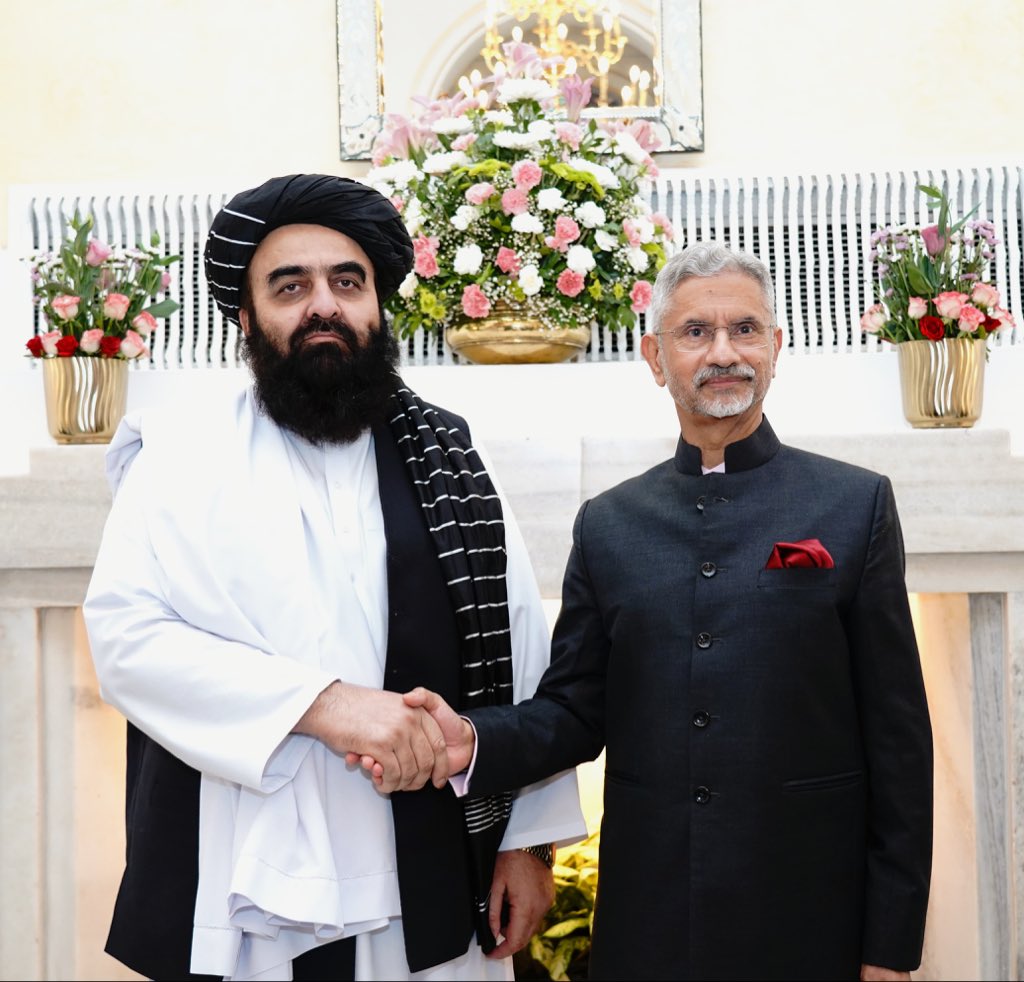
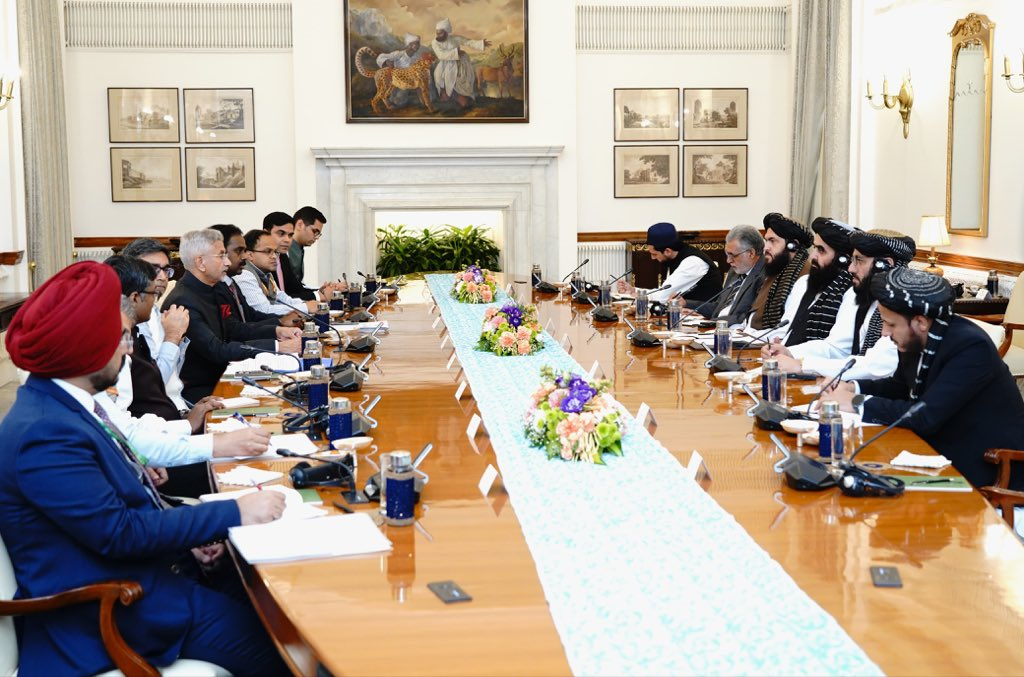
Taliban Foreign Minister Aamir Khan Muttaqi visited India for a week-long trip, drawing widespread attention. While his meetings in Delhi were notable, it was his grand welcome in Deoband, Uttar Pradesh, that sparked deeper conversations around the spiritual, cultural, and geopolitical ties between India and Afghanistan.
🛬 Aamir Khan Muttaqi’s India Visit: Delhi Meetings and Deoband Journey
Taliban Foreign Minister Aamir Khan Muttaqi arrived in New Delhi for a series of diplomatic discussions. He met with Indian officials, including Dr. Ajay Shankar, signaling a possible thaw in India-Taliban relations, despite India’s cautious stance on officially recognizing the Taliban government.
Following his Delhi meetings, Muttaqi travelled to Deoband, a small but globally significant town in Uttar Pradesh. What happened next surprised many.
🌸 Deoband’s Grand Welcome for Taliban Foreign Minister
In Deoband, Muttaqi was welcomed with flower showers, cheers, and large crowds. Videos shared online showed people lined up to greet him, a reception rarely seen for any foreign minister — especially one from a government still considered controversial.
His visit was more than just symbolic. It showcased Deoband’s unique place in the Taliban’s ideological roots, sparking both curiosity and debate nationwide.
📍 Why Deoband Is Important to the Taliban
Deoband is home to Darul Uloom Deoband, one of the world’s most respected Islamic seminaries. It was here in 1866 that the Deobandi movement began — a Sunni Islamic reformist ideology that follows the Hanafi school of jurisprudence.
Over time, the movement spread far beyond India to Pakistan, Afghanistan, Bangladesh, and even parts of Africa and the UK.
Today:
- The Deobandi network influences thousands of madrasas across South and Central Asia.
- Many Afghan Taliban leaders, including spiritual figures and field commanders, have been educated at Deobandi-affiliated institutions, such as Darul Uloom Haqqania in Pakistan.
- In Afghanistan, Deobandi ideology shapes the Taliban’s religious education policy and clerical structure.
Although Deoband itself remains a peaceful educational center, its ideological legacy lives on in the Taliban’s religious framework — making the town a symbolic spiritual ally.
💬 What Aamir Khan Muttaqi Said in Deoband
Addressing the gathering in Deoband, Muttaqi made several key statements:
“We are thankful to the Ulema and the people of Deoband for this warm welcome. Our spiritual connection goes back generations, and we wish for our students to come and study here.”
— Aamir Khan Muttaqi
He also highlighted the potential for stronger India-Afghanistan relations, particularly in the areas of cultural and educational exchange.
🤝 Why This Visit Matters: More Than Just Diplomacy
This visit may seem symbolic, but it has wider regional implications:
- It underscores the importance of religious and ideological diplomacy in South Asia.
- It shows how India, without formally recognizing the Taliban, may still engage with them through cultural and spiritual channels.
- It highlights how Deoband’s historical influence continues to shape modern political narratives across the region.
📌 Conclusion
Aamir Khan Muttaqi’s visit to India, and particularly to Deoband, reveals a complex mix of faith, history, and foreign policy. Whether or not formal diplomatic ties are established soon, this event proves that spiritual connections can still influence international relations — and Deoband remains at the heart of it.