
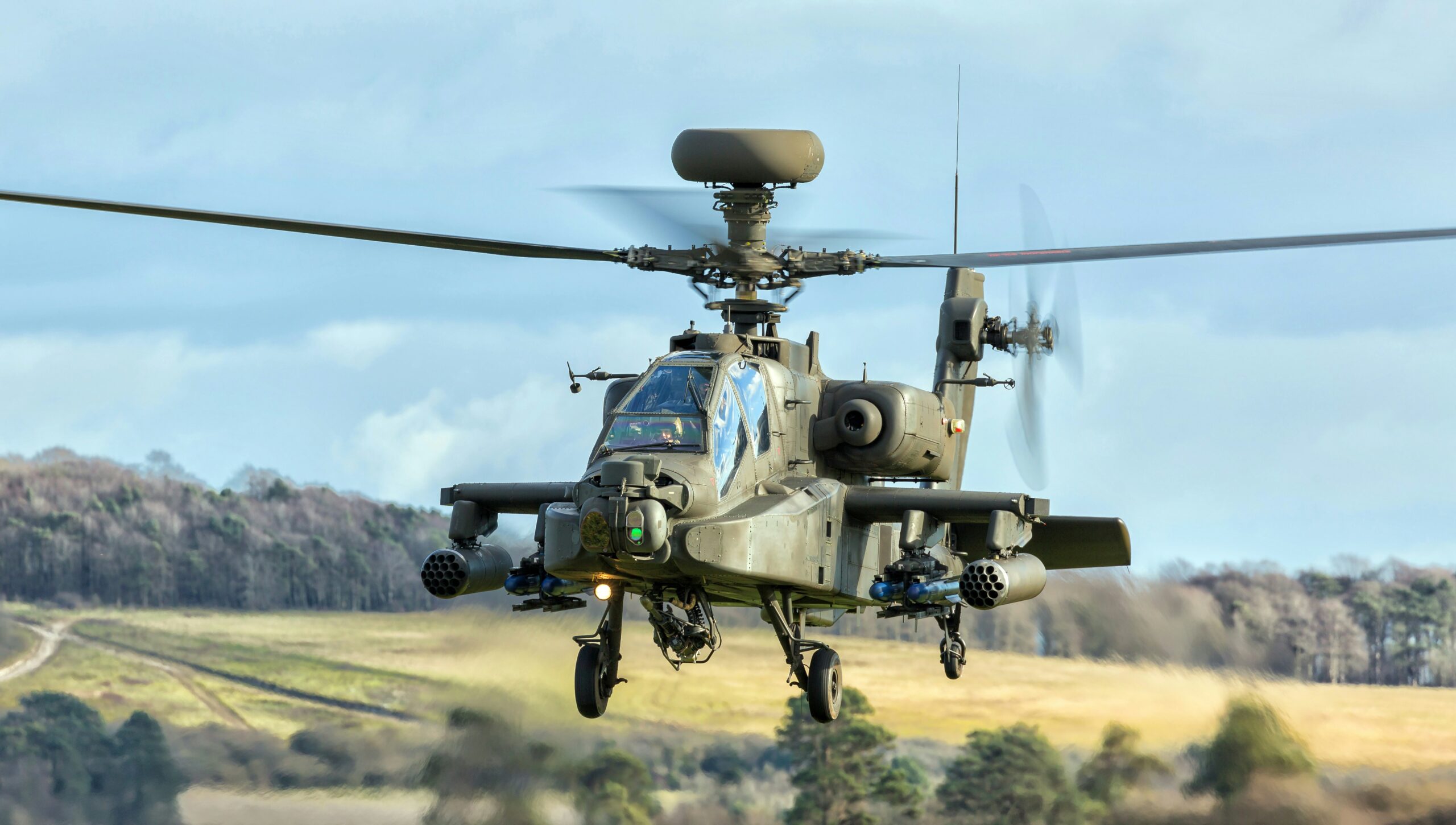
This topic has been in the news recently, with multiple articles published—but many people still don’t fully understand what happened. Let’s break it down.
Background: Apache Helicopter Deal
- In 2020, India purchased six Apache attack helicopters from Boeing for $600 million.
- The Indian Army planned this acquisition to strengthen its defense capabilities.
- Boeing committed to delivering the helicopters by 2024, but the final batch faced some delivery delays.
Delivery Route and the Role of Antonov Airlines
- The helicopters needed to be transported over 13,000 kilometers from the USA to India.
- Boeing contracted Antonov Airlines, a Ukraine-based airline with prior experience delivering defense equipment to India.
- The usual route: USA → UK → Turkey → India, based on established flight corridors.
Why Not a Direct Route?
- Airlines cannot simply take any path; they follow fixed routes for logistical and regulatory reasons.
- Antonov Airlines had successfully used this route multiple times in the past.
What Triggered the Block?
- Recently, India boycotted Turkey’s National Day, which displeased Turkey.
- Turkey has been supporting Pakistan, including during operations like Operation Sindoor.
- In response, Turkey blocked the usual transport route for the helicopters.
Impact on Delivery
- The Apache helicopters will still reach India, but via an alternate route.
- Likely new paths: USA → UK → Egypt → India or USA → UK → Israel → India.
- Turkey’s move is more of a political signal than a permanent blockade.
Turkey’s Strategy
- Turkey is signaling discontent but also claiming it is not acting against India.
- Despite this, its actions—economic pressure, route blockages, and support to Pakistan—do affect India strategically.
Trade and Economic Context
- India’s trade with Turkey is relatively small: around 1–1.5% of India’s total exports.
- Exports to Turkey have grown but remain replaceable if needed.
- Strategically, India can mitigate these actions by strengthening its global supply chain and defense logistics.
Conclusion
- Turkey’s action is a political maneuver, reflecting its current stance toward India.
- India remains capable of handling the situation: alternate routes ensure defense deliveries, while trade and economic measures minimize long-term impact.
- This incident highlights the importance of strategic resilience in defense logistics and international relations.