
Israel’s Foreign Minister and global leaders, including Finland’s President, have recognized India as the next rising superpower. Explore why experts and economists believe India is on course to become a global powerhouse by 2047.
India’s Rising Global Recognition
Over the past five years, no foreign leader has consistently called India a “future superpower” — except Israel. Recently, Israel has reiterated this statement twice in a single year, calling India “the next global superpower.” This growing acknowledgment has even influenced other nations, with Finland’s President echoing similar sentiments.
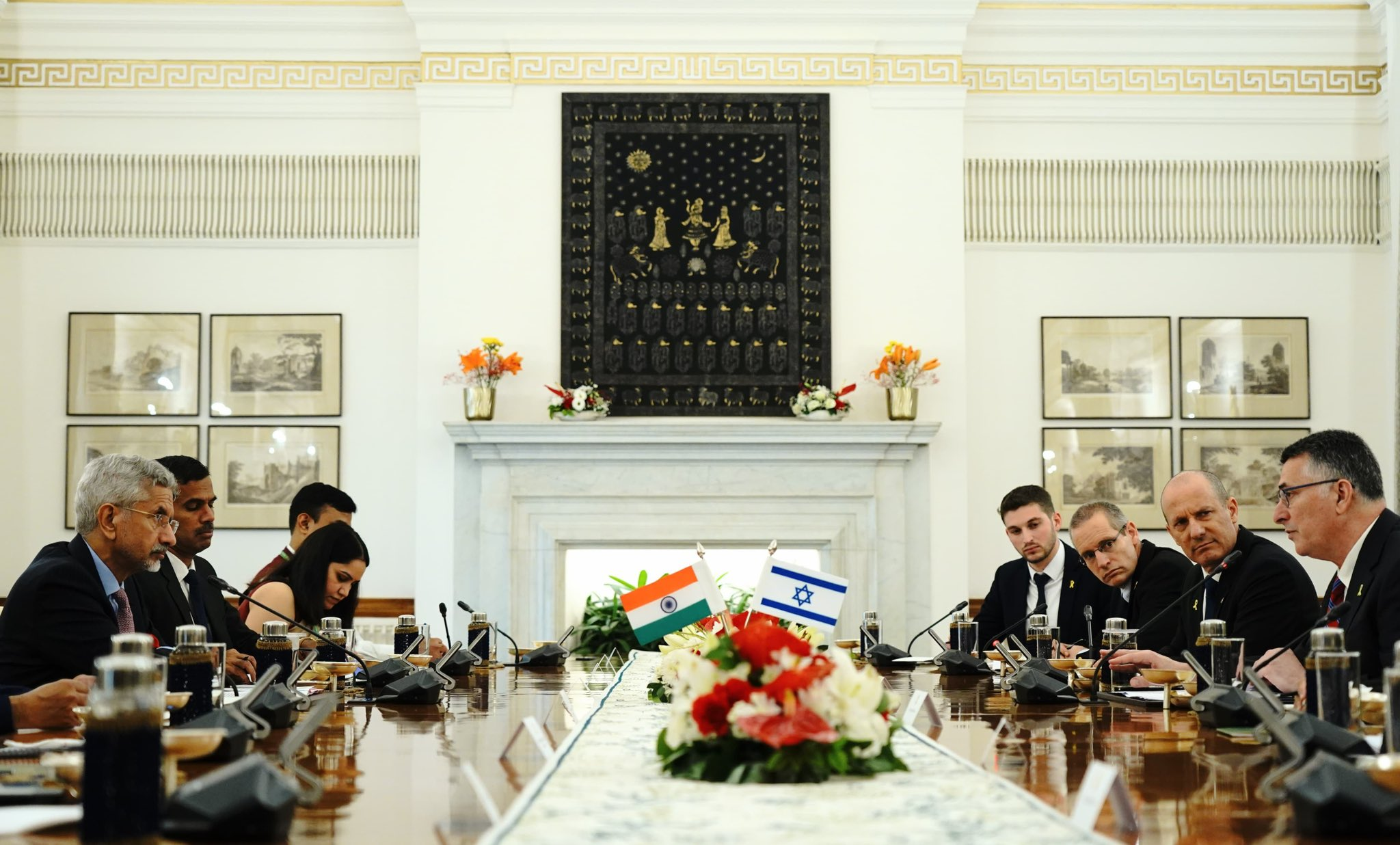
Currently, Israeli Foreign Minister Eli Cohen is visiting India. A viral video shows him praising India’s growth and vision, stating:
“India is the future. We have to invest in India — it will be the next global superpower.”
In the clip, Cohen is seen in conversation with India’s External Affairs Minister Dr. S. Jaishankar, emphasizing India’s status as the world’s largest democracy and the fastest-growing major economy.
Strengthening India–Israel Relations
Eli Cohen also highlighted that Israel and India share a warm and strategic friendship. He mentioned the goal of building a long-term partnership between the two nations.
At a time when Israel faces diplomatic challenges with several European nations due to its recent actions in Gaza, India has maintained a balanced stance — condemning violence while continuing to enhance bilateral relations.
This measured approach has positioned India as one of Israel’s most trusted global partners, second only to the United States. Over the next three decades, Israel is expected to deepen cooperation with India across defense, technology, and innovation sectors.
Why 2047 Marks India’s Superpower Milestone
Economists and major international think tanks largely agree that India is on the path to superpower status by 2047 — marking 100 years of independence. Analysts like Martin Wolf and U.S. research institutions project India’s GDP growth to remain between 7% and 7.5%, propelling the nation toward global leadership.
Despite earlier skepticism — such as the “India superpower by 2020” meme — recent data supports this vision. The World Bank recently confirmed that extreme poverty in India has fallen to around 5.3%, a significant milestone that validates former President Dr. A.P.J. Abdul Kalam’s vision of an economically strong India.
Global Perspective: How Many Superpowers Exist Today?
Currently, only one nation is considered an existing global superpower — the United States of America. However, several countries, including China, the European Union, Russia, and India, are seen as potential superpowers.
Becoming a superpower requires more than population size or geography. It demands:
- Economic Power: A GDP ranking among the world’s top three and the presence of global corporations like Microsoft, Apple, or SpaceX. India is now nurturing its own multinational champions.
- Global Currency Influence: A currency used in at least 15–20% of global trade can signify true economic strength.
- Military Capability: The ability to project military power globally — a blue-water navy and nuclear deterrence are critical elements.
India’s progress in each of these areas shows why global leaders increasingly view it as a rising global force.
Conclusion: The World Watches India’s Ascent
From Israel’s repeated endorsements to Finland’s acknowledgment and the UN’s growing calls for India’s permanent seat on the UN Security Council, it’s clear that the world recognizes India’s upward trajectory.
With a robust democracy, consistent economic growth, advanced technology, and strategic diplomacy, India is set to become a superpower by 2047 — not just in theory, but in global influence and leadership.