
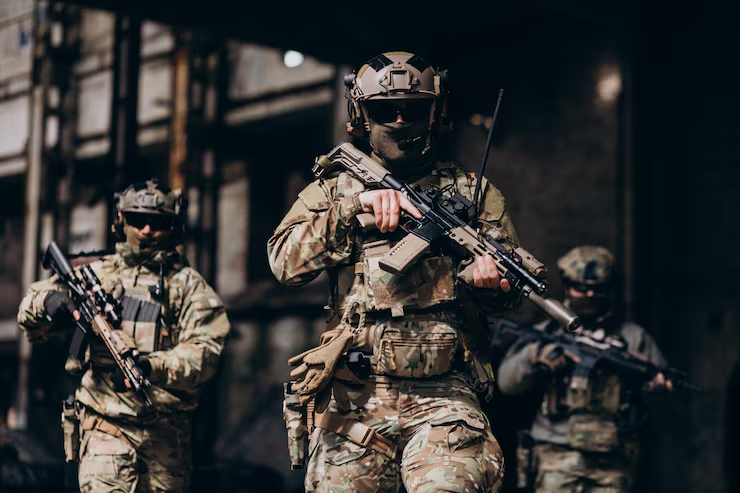
In a rare and potentially volatile situation, India and Pakistan have both issued Notices to Airmen (NOTAMs) for overlapping areas in the Arabian Sea. While India is conducting its Trishul military exercise, Pakistan recently announced its own drills in the same zone — a move that has sparked widespread concern across defense and diplomatic circles.
India’s Trishul Exercise Underway
India’s Trishul military exercise is a large-scale, tri-services drill involving the Indian Navy, Air Force, and Army. The exercise aims to enhance joint operational readiness, test combat preparedness, and strengthen maritime security.
However, the situation took a sharp turn when Pakistan issued a NOTAM overlapping India’s exercise area, signaling its own military operations from November 2 to 5. This unusual overlap is viewed as provocative and risky, given the sensitive nature of India-Pakistan relations.
Why the Overlap Is Dangerous
The main concern stems from the fact that both countries are operating advanced naval and air assets in the same region. Even a minor miscalculation — a stray missile, an incorrect radar signal, or a misinterpreted movement — could escalate into a serious conflict.
Recent incidents, such as the accidental BrahMos missile misfire from India into Pakistan in 2022, highlight just how real these risks are. Globally, as military exercises multiply, so does the potential for accidents. In fact, major nations now conduct 50–60 military exercises annually, compared to just a handful two decades ago.
Pakistan’s Motives: Distraction Amid Economic Crisis
Many analysts believe that Pakistan’s decision to conduct parallel exercises is politically motivated. The country’s economic crisis has reached critical levels — foreign investments are low, inflation is high, and debt continues to spiral.
A recent video of Prime Minister Shehbaz Sharif showed him appealing for financial help, emphasizing that Pakistan no longer wants loans but free assistance. Such statements reflect deep economic distress and perhaps the government’s need to divert public attention away from domestic troubles.
According to defense experts, creating external tensions could help Pakistan rally internal support and shift focus from its financial instability.
The Risk of Escalation and Global Involvement
If even a small incident occurs during these overlapping drills, it could easily escalate. Pakistan’s strategic calculations seem to rely on the belief that the United States or other Western allies would intervene diplomatically if a confrontation arises.
However, such assumptions are dangerous. Any misstep in the Arabian Sea could have serious implications, not only for South Asia but also for global trade and maritime security.
India’s Response and Preparedness
India’s armed forces remain professional and cautious. The Indian Navy’s modernization drive and frequent readiness checks are part of a long-term strategy to maintain superiority in the region.
Still, with Pakistan deliberately conducting exercises near India’s declared NOTAM area, vigilance is critical. Ensuring strict coordination, maintaining communication channels, and avoiding reactive measures are essential to preventing escalation.
Conclusion
The simultaneous NOTAMs by India and Pakistan represent more than just routine military exercises — they’re a reminder of how fragile peace in South Asia can be. While India’s Trishul exercise focuses on preparedness, Pakistan’s overlapping drills appear to serve as both a political statement and a strategic gamble.
The coming days will be crucial. Any miscalculation could trigger a crisis that neither side truly wants — and the world will be watching the Arabian Sea closely.