
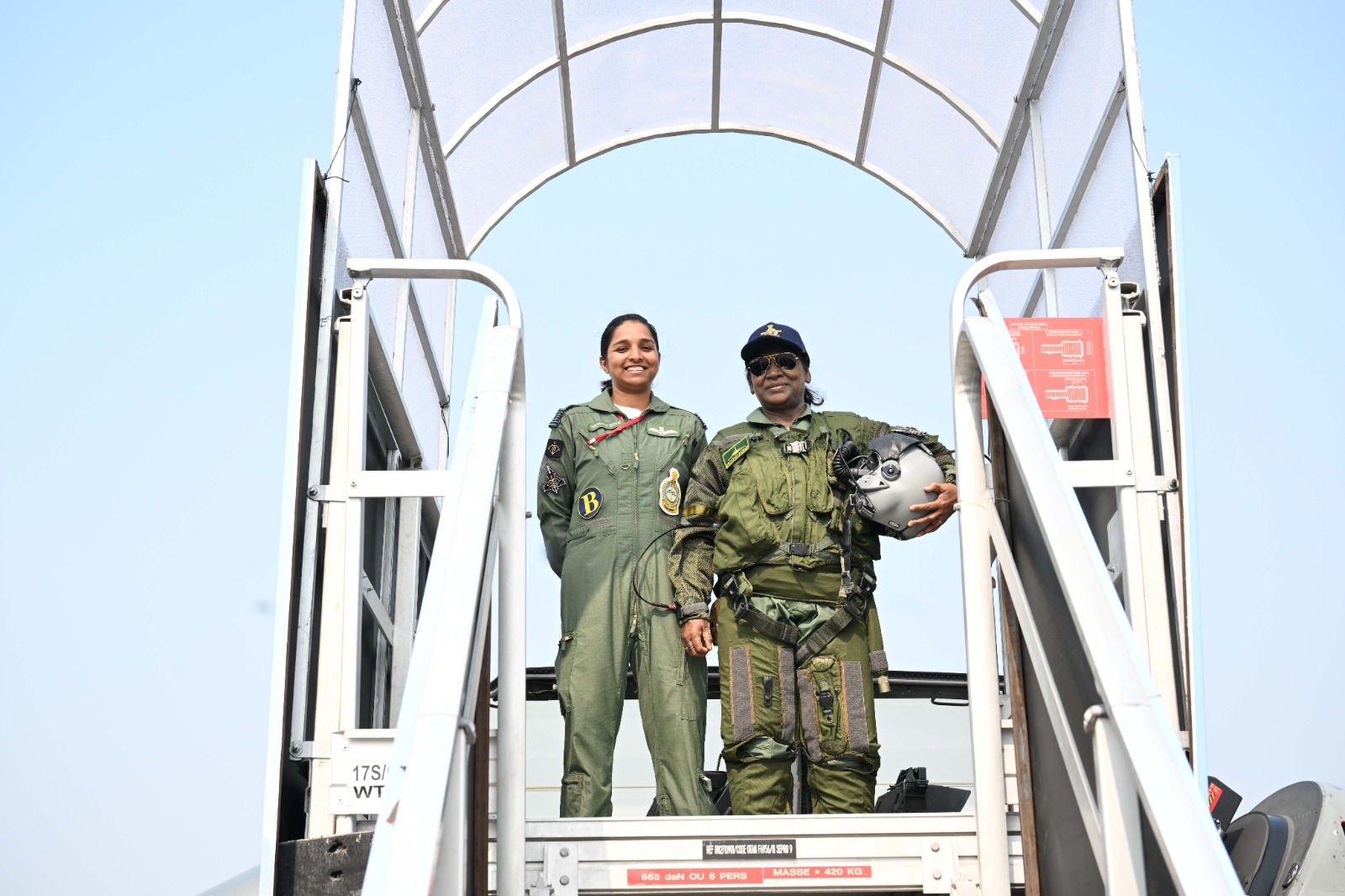
Over the past few days, one name has dominated social media and news headlines — Squadron Leader Shivangi Singh, India’s only female Rafale fighter jet pilot. A photograph of her standing alongside President Droupadi Murmu has gone viral, silencing misinformation and exposing Pakistan’s false claims during Operation Sindoor.
During the operation, several Pakistani media outlets and journalists claimed that Shivangi Singh’s Rafale jet had been shot down, alleging that she had been killed or captured. However, the truth has now emerged — Shivangi Singh is alive, active, and continues to serve the nation.
Pakistan’s False Claims During Operation Sindoor
During Operation Sindoor, Pakistan engaged in a coordinated propaganda campaign. Numerous Pakistani news channels and online portals reported that an Indian female fighter pilot had been captured after her Rafale jet was shot down.
One report even aired on Al Jazeera, quoting unnamed “military sources” claiming that Pakistan had downed two Indian Rafales and detained a female pilot. These claims quickly spread across social media, amplified by Pakistani-origin journalists who presented a pro-Pakistan narrative to international audiences.
Social media platforms were soon flooded with AI-generated images, edited videos, and fake tweets falsely depicting Shivangi Singh as a prisoner of war. Many Pakistani citizens genuinely believed the story, demonstrating the power of coordinated misinformation.
The Truth: Shivangi Singh is Alive and Serving India
Recent events have completely debunked these lies. Squadron Leader Shivangi Singh was recently seen accompanying President Droupadi Murmu, who became the first President of India to fly in a Sukhoi fighter jet in 2023.
In a historic moment, President Murmu also flew in a Rafale fighter jet — with none other than Shivangi Singh as her co-pilot. The images and official confirmation from the Indian Air Force have exposed Pakistan’s propaganda narrative once and for all.
This moment not only confirmed Shivangi Singh’s safety but also celebrated her as a symbol of women’s empowerment in the Indian Armed Forces.
India’s PR Challenge and the Importance of Timely Communication
While the truth has finally emerged, this incident also highlights a recurring issue: India’s slow public relations response.
The Indian Air Force later revealed that more than 13–14 Pakistani fighter jets, including F-16s, were destroyed during Operation Sindoor. However, these details were made public much later, allowing misinformation to dominate international narratives temporarily.
India often lags in strategic communication and counter-propaganda, which creates opportunities for hostile narratives to spread unchecked. Timely information sharing, backed by official sources, could have countered Pakistan’s fake stories more effectively.
Media Bias and the Spread of Disinformation
The episode also exposed the clear media bias among several Pakistani-origin journalists working with global outlets. Unlike Indian-origin journalists, who often maintain balanced perspectives or even criticize their own government, many Pakistani journalists abroad push nationalistic agendas that distort facts.
During Operation Sindoor, such bias was evident across several international platforms. Articles and news segments carried unverified claims, further spreading Pakistan’s misinformation campaign to a global audience.
Conclusion
The story of Shivangi Singh serves as a powerful reminder of how quickly misinformation can spread — and how equally powerful the truth can be once revealed.
India’s only female Rafale pilot not only survived Pakistan’s propaganda war but emerged as a national icon of courage and professionalism.
Her story underscores two key takeaways: the resilience of India’s Armed Forces and the urgent need for stronger strategic communication in the age of digital warfare.